
Xinyuan Tian
Ph.D. Candidate in Biostatistics
Yale School of Public Health
Suite 523300 George St.
New Haven, CT 06510
About Me
Welcome to my website! My name is Xinyuan Tian. I am currently a Ph.D. candidate in the Department of Biostatistics at Yale School of Public Health, advised by Dr. Yize Zhao and Dr. Denise Esserman.
Prior to this, I received my M.Sc. in Biostatistics from Yale University in 2022, and my dual B.Sc. degrees in Applied Mathematics and Statistics from the University of California, Los Angeles (UCLA) in 2020.
My research develops interpretable artificial intelligence and Bayesian methods for complex biomedical data, with applications in neuroimaging, imaging genetics, and electronic health records. My work combines the flexibility of modern AI models with the inferential discipline of statistical modeling, so that complex data can yield findings that are both interpretable and reliable. My methodological interests include Bayesian inference, deep learning, causal inference and mediation analysis, network analysis, and survival analysis. These methodological and applied contributions have led to publications in Biometrics, Nature Methods, the Journal of the Royal Statistical Society, Series C, Biostatistics, Statistics in Medicine, and Imaging Neuroscience, as well as conference papers at ICML and NeurIPS. My research has been recognized with the John Van Ryzin Award from ENAR and ASA Student Paper Awards from the sections on Bayesian Statistical Science and Statistics in Imaging. Please visit the Research page for more details.
I expect to complete my Ph.D. in May 2027 and am on the 2026–2027 academic job market, seeking tenure-track assistant professor positions in statistics or biostatistics beginning Fall 2027.
News
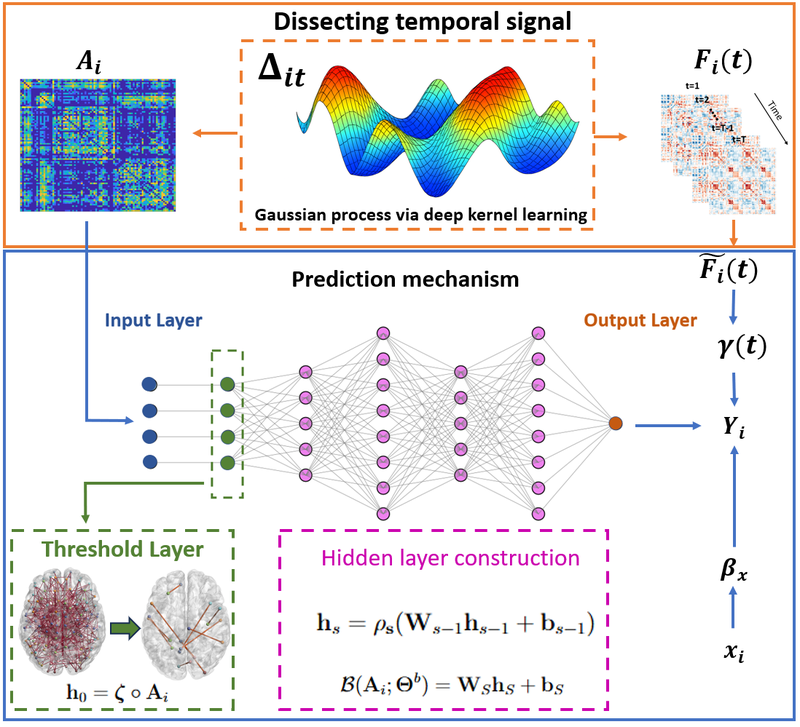
- October 2026 Our paper, A Bayesian deep learning framework for brain dynamic functional connectivity linked with cognition, was published in Biometrics. The work reveals how moment-to-moment changes in brain connectivity relate to cognition, opening new ways to identify dynamic brain markers of cognitive function and decline.
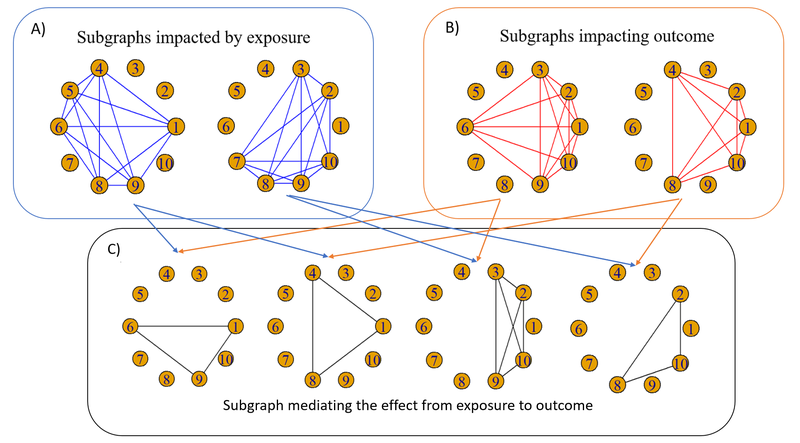
- September 2026 Two of our papers were accepted at the Conference on Neural Information Processing Systems (NeurIPS 2026): Orthogonal sparse subgraph alignment for structure–function coupling in brain networks and ELPAC: Endpoint-anchored latent progression with stage-varying multimodal coordination.
- August 2026 Presenting A Bayesian deep learning framework for brain dynamic functional connectivity linked with cognition at the Joint Statistical Meetings (JSM) 2026 in Boston, highlighting new approaches for connecting dynamic brain networks with cognitive outcomes.
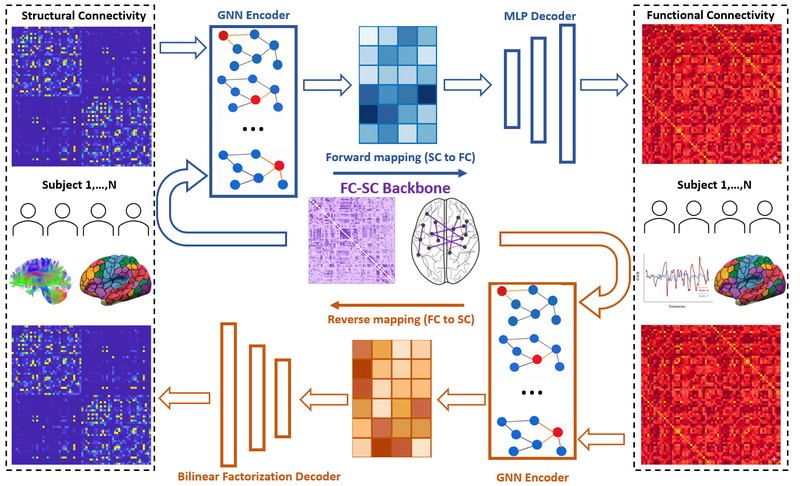
- June 2026 Presented Bidirectional graph autoencoder with shared latent graph for structural–functional connectivity backbone inference at Statistical Methods in Imaging (SMI) 2026 in Ann Arbor, introducing a shared latent graph approach to structural–functional connectivity.
- January 2026 Honored to receive ASA Student Paper Awards from the American Statistical Association’s Statistics in Imaging Section and Mental Health Statistics Section (declined under the dual student award policy) for my work on dynamic functional connectivity and cognition.
- January 2026 Our paper, Latent space-based network analysis for brain–behavior linking in neuroimaging, was published in Nature Methods, 23(1), 225–235. LatentSNA preserves the network structure of the brain to improve the detection of imaging biomarkers linked to behavior, supporting more reliable and replicable brain–behavior studies.
Selected Publications
Tian X., Zhang Y., Liu P., Ding S., Guo Y., Wang S., Esserman D., & Zhao Y.
Under review, International Conference on Learning Representations (ICLR).
See all publications.
Education
- CurrentYale University Ph.D. Candidate in Biostatistics
- 2022Yale University M.Sc. in Biostatistics
- 2020University of California, Los Angeles B.Sc. in Applied Mathematics and B.Sc. in Statistics